
The System Nobody Explains Properly
Part 6 of the Seven Pillars Series
If you've been following our 7 Pillars series, you've worked through support, nutrition, activity, and sleep and stress. Each of those pillars addresses a different driver of lipedema progression. Pillar 5 brings us to something that tends to generate a lot of questions, partly because it sounds clinical and partly because most women with lipedema aren't told much about it until they're already in a more advanced stage.
Manual lymphatic drainage, most often abbreviated to MLD, is a specialized technique that supports the lymphatic system in moving fluid through the body. In lipedema, it isn't a luxury or a comfort measure. It's a core part of treatment, and understanding why helps clarify what you're actually trying to achieve when you do it.
For readers arriving here without the series context: lipedema is a chronic condition driven by inflammation. One of the central mechanisms in its progression is the combination of that inflammation with excess lymphatic fluid sitting in the tissues. When those two things meet, they stimulate fat cells to grow. Controlling the fluid side of that equation is exactly what MLD is designed to do.
Why Lymphatic Drainage Is Central and Not Optional To Lipedema
The lymphatic system is a vast network of vessels, nodes, and fluid that runs throughout your entire body. It does four important things: it absorbs nutrients from the gut (nearly 80% of your lymphatic tissue surrounds the digestive system), it helps fight infection, it collects excess fluid that leaks out of cells and tissues, and it filters and transports waste products back into circulation for processing (and disposal).
Unlike the cardiovascular system, the lymphatic system doesn't have its own pump. It relies on muscle movement, breathing, and external pressure to keep fluid flowing. When the system becomes sluggish or overwhelmed, fluid pools in the tissues. In the context of lipedema, that pooled fluid combines with chronic inflammation to create the conditions in which lipedema fat grows and progresses.
This is why drainage isn't something to consider after you've sorted everything else. It belongs in the treatment plan from the start.
What MLD Actually Is (And What It Isn't)
Manual lymphatic drainage is a gentle, rhythmic technique that moves the skin in specific directions to stimulate the lymphatic vessels just beneath the surface. It is nothing like a traditional massage and should never bring tears to your eyes. There is no deep pressure, no kneading of muscle tissue, and it should not hurt. If it does, the pressure is too heavy.
The technique works by gently stretching the skin to open the superficial lymphatic capillaries, encouraging them to take up fluid, and then directing that fluid toward the nearest lymph nodes and into the deeper channels that carry it back toward the heart. Sessions typically begin at the neck or groin areas, where large groups of lymph nodes sit, clearing those channels first before working outward along the limbs. This is intentional: you need to clear the pathway before you move fluid into it.
A professional MLD session from a trained lymphatic therapist will generally last between 45 and 60 minutes and focuses on the specific drainage pathways relevant to where your lipedema is most active. Some women feel significantly better after a session. Others feel temporarily worse after the first few sessions as toxins that have been sitting in the tissues begin to move. That's a normal response. Staying well hydrated in the 24 to 48 hours after a session helps the body process what's been shifted.
Starting at Home: Deep Breathing
The most accessible form of lymphatic support doesn't require any equipment or a professional appointment. It's something you're already doing, just not intentionally: breathing.
Deep diaphragmatic breathing acts as a pressure pump for the lymphatic system. When you breathe deeply into your belly rather than shallowly into your chest, the movement of the diaphragm creates pressure changes in the thoracic cavity that help draw lymphatic fluid upward through the deeper lymphatic channels and into circulation.
To do it correctly, place one hand on your chest and one on your belly. Breathe in slowly through your nose and focus on making the lower hand move outward while the upper hand stays relatively still. Exhale slowly through your mouth. The movement comes from the belly, not the chest.
Even doing a few intentional sessions of diaphragmatic breathing throughout the day, whether at your desk, in the car, or before sleep, contributes meaningfully to lymphatic flow. It costs nothing and requires no special training and for women who are just starting to engage with lymphatic care, it's the natural first step.
Self-Drainage Techniques You Can Do Daily
Beyond breathing, self-drainage is something every woman with lipedema can learn to do at home, and ideally should be doing in some form every day. You don't need to replicate a full professional MLD session. Simple, consistent movements that follow the lymphatic pathways make a genuine cumulative difference over time.
The general principle is to begin close to the core and work outward, then guide fluid back toward the core and up toward the lymph node clusters in the groin, armpits, and neck. Gentle circular movements with light pressure on the skin, not the muscle, along the inner thighs and back of the knees are a common starting point for leg-dominant lipedema.
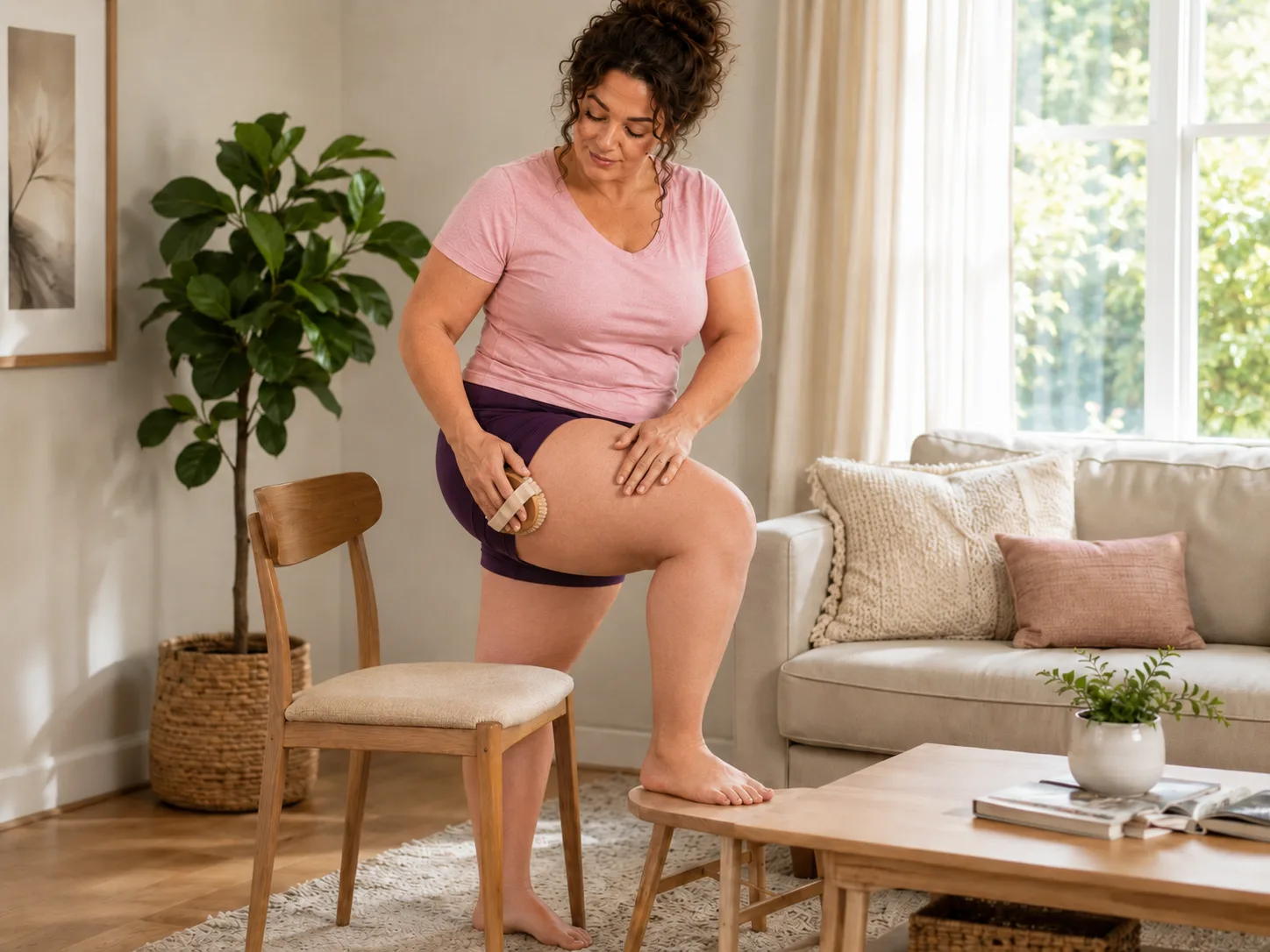
Dry brushing is using a soft natural-bristle brush and follows a similar principle, stimulating the surface lymphatics with light strokes directed toward the lymph node clusters. Add it to your routine before a shower, it's a practical way to build a brief daily lymphatic routine into an existing habit and for some women this is a game changer. Caution not to be too aggressive, especially if you have delicate or thin skin.
When to See a Professional
If you haven't yet had a professional MLD session, it is worth seeking one out, particularly when you're first building out this part of your treatment. A trained therapist can reach pathways that are difficult to access yourself, can assess how your lymphatic system is currently functioning, and can teach you techniques tailored to your specific pattern of lipedema.
When looking for a therapist, seek someone who is certified in lymphatic drainage and who has experience specifically with lipedema or lymphedema. These are related but not identical conditions, and the drainage approach differs. A physical therapist, massage therapist, or lymphatic specialist with lymphedema experience will typically also be familiar with lipedema.
If you're not sure where to start, calling local physical therapy or massage practices and asking directly whether they treat lymphedema is a good first step, the next step is asking about lipedema. A referral from your treating clinician can also help identify appropriate providers in your area.
Compression as MLD's Partner
Compression garments work hand in hand with MLD. Where drainage actively moves fluid through the lymphatic vessels, compression provides the sustained external pressure that supports venous return from the legs and prevents fluid from re-accumulating in the tissues after drainage.
Wearing compression consistently, particularly during periods of prolonged sitting or standing, is one of the most direct ways to support your lymphatic system between drainage sessions. Micromassage compression, as the name suggests, actually helps massage your legs with your natural movement creating an MLD effect.
We've covered compression in depth across several posts on the site, including how to find your fit, what micromassage compression offers, and how to layer garments when a single layer isn't providing enough support. Those posts are linked below; they are worth reading alongside this one if compression is a gap in your current routine.
Skin Care, Hydration, and the Details That Matter
Two supporting elements deserve mention alongside MLD.
Skin integrity matters more than most women realize. Healthy, intact skin over lipedema tissue is a barrier against infection. Damaged, cracked, or inflamed skin creates entry points for bacteria that can lead to cellulitis, a soft tissue infection that causes significant local inflammation and can set lymphatic function back considerably. Keeping the skin moisturized, protected, and monitored is a quiet but meaningful part of lymphatic care.
Hydration can also directly affect how easily lymphatic fluid moves. Thick, viscous lymphatic fluid, the result of inadequate water intake, moves sluggishly through the lymphatic channels. Well-hydrated fluid moves efficiently. Drinking adequate water throughout the day, front-loaded toward the morning and early afternoon rather than the evening, supports every aspect of lymphatic function including drainage. It's simple, but it matters.