
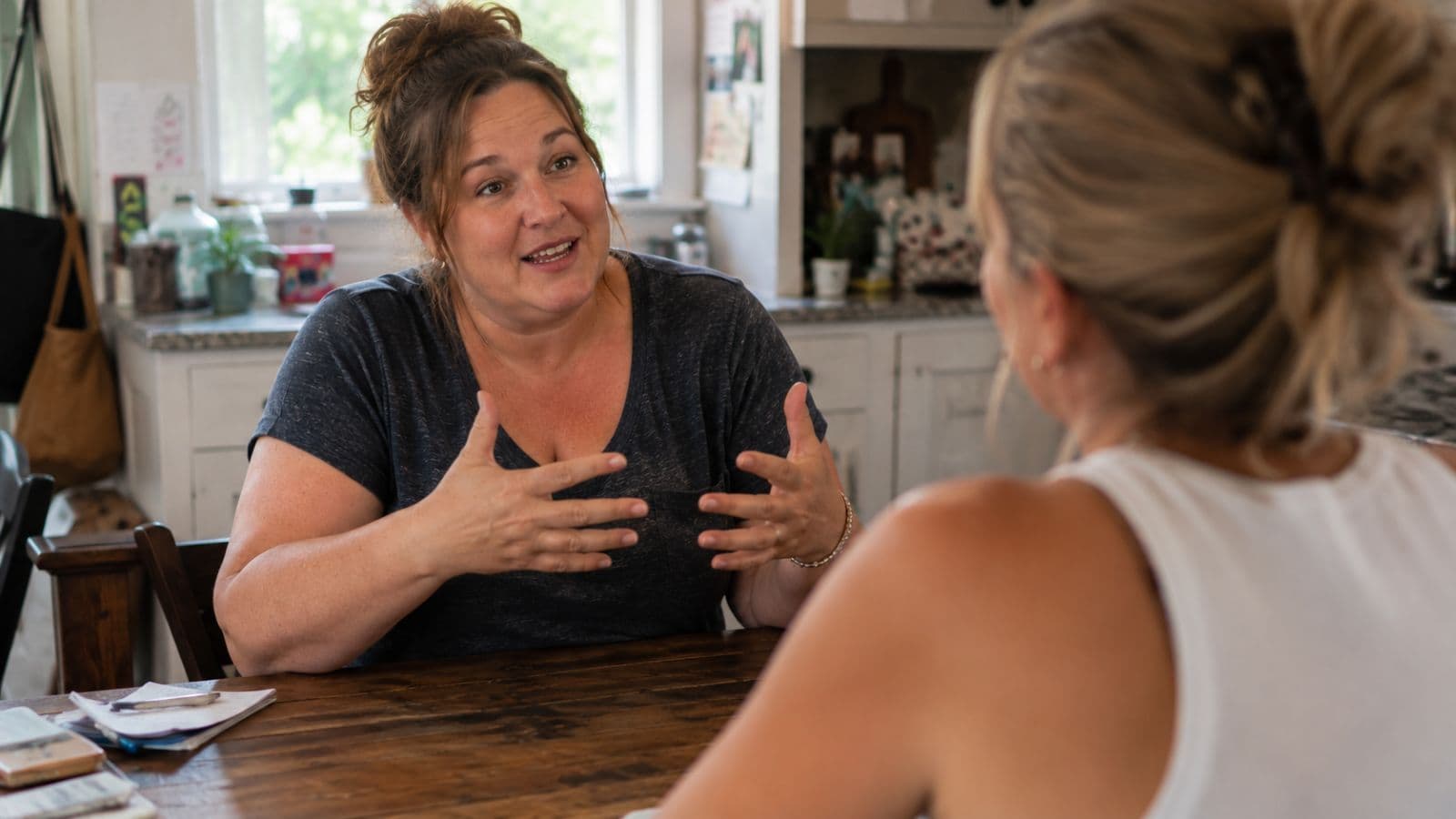
Explaining Lipedema to the People You Love
When you finally get a lipedema diagnosis, it is often after years of searching and you expect relief. What nobody mentions is that now you have the job of being a translator. Lipedema is a condition most people have never heard of, including, sometimes, your own doctor. That means the work of explaining it lands with you. Over and over, at dinner tables and family barbecues and in quiet bedroom conversations.
It is exhausting to be the press office for your own body. You did not ask for the role, and on hard days you may not have the energy for it. That is a very fair and understandable emotion to have.
But a few well-chosen words, prepared in advance, can change how the people around you respond to your condition for years. This article is a phrasebook: the short version, the longer version, and scripts for the conversations that tend to go sideways. Use what fits, and skip what doesn’t.
Why the People Closest to You Get It Wrong
Here is the uncomfortable truth: the people who love you most are often the slowest to understand lipedema. Not because they don’t care, but because they are looking through the only lens our culture hands them, the diet lens. Through that lens, changing legs means changing habits, and concern comes out as advice about salads and steps - the old “energy in equals energy out” line.
Lipedema breaks that lens. The tissue is biologically different from ordinary fat: it hurts, it bruises easily, and research suggests it responds poorly to the diet and exercise that shifts obesity weight on the body. Many women lose weight everywhere except the places where their lipedema lives. If they have never encountered a condition like this, or they had been told all their lives it was just fat, they will file what they see under the category they know.
It helps to expect this rather than resent it. Their first reaction is usually a translation error, not a verdict on you. Your job, if you choose to take it on, is to hand them a better lens.
One more thing worth knowing before the conversations start: you do not owe anyone a medical seminar and some people would not listen even if they had a professional standing in front of them. You are unique and special, and are not alone in this. You get to decide who deserves and receives the full explanation, who gets one sentence, or a dissertation and who gets a subject change.
The Thirty-Second Version
Most conversations don’t need a lecture. They need one clear paragraph, delivered calmly, that you have practiced enough to say without your voice shaking. Here is a version you can adapt:
“Actually I have a medical condition called lipedema. It’s a tissue disorder that causes painful fat tissue to build up, mostly in my legs and arm, and it doesn’t respond to diet and exercise the way normal fat does. It affects millions of women and it’s often mistaken for a weight problem, which is why it took so long to get diagnosed. I’m managing it with my care team, and what helps most is support, not suggestions.”
Every sentence in that paragraph is doing a job. It names the condition, so they can look it up. It explains the pain, which most people never suspect. It preempts the diet advice. It signals you are actively managing it. And it tells them what you actually need.
Say it, then stop talking. Resist the urge to apologize or pad it with jokes. Silence after a clear statement is where understanding starts.
Scripts for the Conversations That Go Sideways
Some conversations need more than the thirty-second version. Here are a few common ones, with language that tends to work:
For your partner: “My legs hurt even when I don’t mention it. When I say I need to rest or elevate them, it isn’t laziness or that I’m tired, it’s management. The best thing you can do is take the condition seriously and ask how you can help.” Men often want a task, so give them one: research lipedema and learn the basics, get them to help protect your routine, or just ask “How are your legs today?” like it’s a normal question, because in your house it is.
For the relative with diet advice: “I know you mean well, and I’ve got this covered with my doctors. Lipedema fat doesn’t respond to dieting the way normal fat does, so the advice that works for you won’t work on my body, especially my legs. What would really help is maybe talking about something else.” Repeat as needed. Kindness plus a boundary, on a loop.
For children: keep it simple and unafraid. “Mom’s legs have a condition that makes them a bit sore sometimes. It’s not dangerous, and the doctors and I take good care of it.” Children take their emotional cues from you: a calm explanation teaches them your body is not a crisis.
For friends who’ve noticed you declining invitations: “Some days my legs (or body) have more to give than others. Keep inviting me, and trust me to know which days are which.”
You will not deliver these perfectly, and you don’t need to. The goal is not a flawless speech. It is refusing to let silence write the story for you.
Ask for Support, Not Just Understanding
Understanding is lovely, but it is passive. What changes daily life is support with a shape to it, and most loved ones are relieved to be given something concrete to do.
Think about what would actually lighten your load, and ask for it plainly. That might be twenty minutes in the evening to do your lymphatic routine without interruption. A partner who learns why compression garments matter, and doesn’t blink at them and helps you get into your pump sleeves. Family meals that quietly work for your anti-inflammatory eating without an announcement every time. Company on walks or at the pool, which research suggests does double duty, since strong social support is consistently linked with better quality of life in chronic conditions.
Notice that none of these require anyone to fully grasp the biology of lipedema. People who love you can support routines they only half understand. Understanding often arrives later, riding on the back of habit.
And if certain people never get there, let that be information rather than heartbreak. Protect your energy for the ones who show up, and lean on communities of women who already speak the language fluently. You never have to translate for them.
Bringing Them Into the Room
For the people closest to you, one appointment is worth a hundred explanations. Consider inviting your partner, or a parent or adult child, to a medical visit. Hearing a clinician describe lipedema as a real, physical condition does something that your words at the kitchen table, however well chosen, sometimes cannot. If a topic feels too big for home, like surgery, new symptoms, or how the condition may change over time, bring the question to your clinician together and let the appointment do the heavy lifting.
Shared learning works at home too. Send one good article rather than ten. Watch a short video together. Some partners do best with the practical angle, like learning what a flare looks like and what helps. Others connect through the science. Offer both doors and let them pick.
We have webinars, courses, and articles all to help you with this on the website. Find what might be appropriate for you and save them. Then you know where to find them when you need them.
However you approach it, remember the order of operations: you were never the problem to be explained. Lipedema is. The more the people around you see that distinction, the more the conversations stop being about defending your body and start being about caring for it, together. That shift, more than any perfect script, is the translation that matters.
Further Reading
Lipedema Support: Why This Is Pillar One
Why Women with Lipedema Often Have a History of Disordered Eating