

Part 1 of the Seven Pillars Series
For a lot of women, getting a lipedema diagnosis is equal parts relief and overwhelm. Relief because there is finally a name for what has been happening in your body for years, possibly decades. Overwhelm because the next question is immediate and obvious: so what do I do about it?
That question deserves a real answer. Not a vague list of lifestyle tips, and not a push toward a single treatment as though that fixes everything. Lipedema is a complex, inherited, multi-layered condition, and managing it well requires a structured approach that addresses several things at once.
That's where the 7 Pillars of Lipedema Treatment come in.
Why Lipedema Needs a Different Playbook
One of the most important things to understand about lipedema is that it does not respond to standard weight loss strategies. Calorie restriction, high-intensity exercise, bariatric surgery, the usual advice you get from a doctor's office: none of these address what is actually driving the condition.
What drives lipedema is inflammation. Specifically, it's the cycle of chronic inflammation combined with excess lymphatic fluid that causes lipedema fat cells to grow and multiply, a process called adipogenesis. Breaking that cycle requires a holistic, multi-disciplinary approach. That's not a buzzword. It means that treating only one aspect, and ignoring the others, will produce limited and short-lived results.
The 7 Pillars framework exists because lipedema needs a complete strategy, not a single fix.
The 7 Pillars: Your Treatment Framework
Think of the 7 Pillars the way you'd think about building a house. Pillars 1 through 6 are the foundation and the structure: the things you build first, maintain consistently, and return to when something needs reinforcing. Pillar 7, medical intervention, is the renovation work. It can be transformative, but only if the structure underneath it is solid. Without that foundation, results are harder to achieve and harder to keep.
The seven pillars are:
Pillar 1: Support (community, mental health support, not doing this alone)
Pillar 2: Nutrition (anti-inflammatory, low-carb, lymphatic-friendly eating)
Pillar 3: Activity (lymph-happy movement, not punishment exercise)
Pillar 4: Sleep and Stress (two underestimated inflammatory triggers)
Pillar 5: Manual Lymphatic Drainage (moving fluid, clearing toxins)
Pillar 6: Supplements (filling the gaps, supporting immune system & detoxing)
Pillar 7: Medical Intervention (medications and surgery, if/when the time is right)
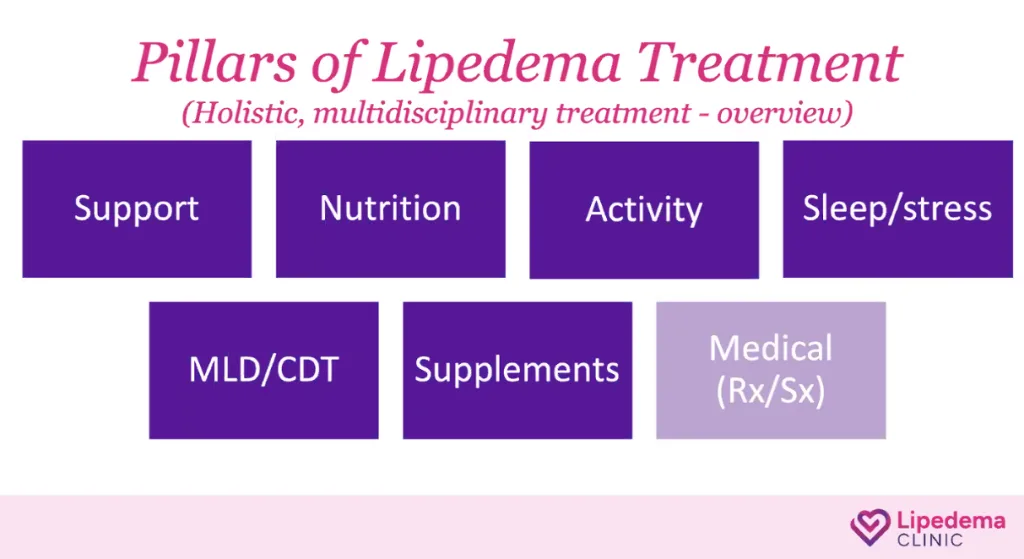
Each of these has its own dedicated post in this series, linked below as they publish.
Why Order Matters
It can be tempting to jump straight to Pillar 7. Medications feel like action. Surgery feels like a solution. And for some women, medical intervention absolutely is part of the picture. But here's what the evidence and clinical experience consistently shows: medical treatments work better, and results last longer, when Pillars 1 through 6 are already in place and are a routine part of your new normal.
Inflammation has to be under control before surgery for outcomes to be optimal. Lymphatic function needs support before and after any medical procedure. Nutrition, movement, sleep, stress: these aren't just nice-to-haves. They're the environment in which every other treatment either thrives or struggles.
There is no wrong time to ask for medical help. The door is always open. But the foundation underneath that decision matters more than most women are told.
Pillars 1 to 6 at a Glance
Support comes first because 85% of women with lipedema report that the condition has negatively affected their mental health, self-esteem, and coping abilities. You cannot pour from an empty cup, and you should not be trying to manage this condition alone. Finding your people, whether that's a community, a clinician who gets it, or both, changes everything.
Nutrition is not about dieting. It's about choosing a way of eating that reduces inflammation rather than feeding it. For most women with lipedema, that means moving toward lower-carb, anti-inflammatory foods and away from processed sugars and gluten. It also means learning to read your own body, because lipedema is individual and what works for one woman won't always work for another.
Activity is not about burning calories. The goal is to move in ways that stimulate lymphatic flow, gently build strength, support drainage, and reduce fluid buildup without loading joints or driving up inflammation. Think rebounding, walking, swimming, water aerobics: movement that your lymphatic system actually benefits from.
Sleep and stress are two of the most underestimated inflammatory triggers in lipedema. Poor sleep drives cravings, increases cortisol, and disrupts the body's natural repair processes. Chronic stress has a very similar effect. Addressing both is not optional if you want to see lasting change.
Manual Lymphatic Drainage (MLD) is a gentle, specialized technique that helps move lymphatic fluid through the body and is one aspect of Complete Decongestive Therapy (CDT). Because inflammation combined with stagnant lymphatic fluid is what drives fat cell growth in lipedema, supporting lymphatic flow is one of the most direct things you can do to interrupt that cycle. Compression garments, deep breathing, and self-drainage techniques all play a role here too.
Supplements are the last pillar for a reason. They support and enhance everything the other pillars are doing, particularly detoxing, filling nutritional gaps, and restoring gut health. But they work best when the foundation is already in place. Jumping straight to supplements without addressing the other five pillars is like adding finishing touches to a house that doesn't have walls yet. You need to have the plan in place and the supplements will support you in that.
Pillar 7: When and Why to Bring in Medical Support
Medical intervention, whether that's medication or surgery, is a legitimate and sometimes essential part of lipedema treatment. There is no shame in reaching that point, and there's no rule that says you have to wait a certain amount of time before asking for help. If you're frustrated, if conservative management alone isn't giving you the results you need, that's a valid reason to explore medical options.
What matters is that the conversation happens with a clinician who understands lipedema, and that Pillars 1 through 6 are part of the ongoing plan regardless of what medical route you take. Medication doesn't override the need for good nutrition. Surgery doesn't remove the need for compression and lymphatic care. Medical intervention and conservative management work together. They are not alternatives to each other.
In fact there are studies that show that if you don’t have a plan in place after surgical interventions, you will often see regression. So, it won’t solve all the problems; there is still work to do.
Pillar 7 gets its own dedicated post in this series, covering medications, surgical options, what to expect, and how to prepare.
This Is a Journey, Not a Checklist
The 7 Pillars are not a to-do list you complete and move on from. They're an ongoing framework, something you return to, adjust, and build on over time. Some pillars will feel easier than others. Some will need more attention at different stages of your journey. That's normal.
What this framework gives you is a map. And having a map, knowing what you're working toward and why each piece matters, makes the journey significantly less overwhelming.
Each pillar in this series gets a full post of its own. Work through them in order, or jump to the one that feels most pressing right now. Either way, you don't have to figure this out alone.
Ready to go deeper? The Lipedema Clinic app was created to help you on your journey to living better with Lipedema. The first step is accessing these resources! Lipedema detoxing is about removing inflammatory triggers fueling progression. For step-by-step guidance on how to effectively detox as well as these 7 pillars sign up for the full Lipedema detox course.