
Part 4 of the Seven Pillars Series
If you've been following this series, you've read about why support comes first in the 7 Pillars framework, and why nutrition for lipedema looks different from conventional diet advice. Pillar 3 follows the same logic: but the goal isn't what you might expect.
For women without lipedema, exercise is typically framed around calorie burning, weight loss, or cardiovascular fitness. All valid goals, but none of them are the primary target here for us. When we talk about activity as a treatment pillar for lipedema, the goal is to stimulate lymphatic flow, support venous drainage, improve strength and reduce inflammation. Movement is medicine, but only the right kind, applied in the right way.
If you're arriving at this post for the first time, without the series context: lipedema is an inherited chronic condition driven by inflammation. Excess lymphatic fluid combined with that inflammation causes lipedema fat cells to grow. Specific types of movement can help interrupt that cycle. Other types, however, can make it significantly worse.
Why Traditional Exercise Advice Doesn't Apply Here
This is one of the most important things to understand about lipedema and physical activity: doing more is not always better, and working harder can actually set you back.
The standard advice women receive– push through the discomfort, increase intensity over time, go harder to see results– was designed for a body without lipedema. It doesn't account for the fact that high-intensity effort creates micro-tears in muscle tissue, and that the repair process those micro-tears trigger recruits fluid and inflammatory markers into the surrounding area. For women with lipedema, that means legs that swell, hurt, and feel significantly worse for several days after a session that was supposed to help.
Many women in our clinical practices have reported exactly this: they've tried to exercise their way out of lipedema symptoms, pushed themselves consistently, and ended up worse off than when they started. That's not a failure of effort. That's a mismatch between the prescription and the condition.
What Happens When You Push Too Hard
It's worth being specific about this because it explains why the right kind of movement matters so much.
When muscle fibers are overworked, the body sends inflammation and fluid to repair them. In a body without lipedema, that process resolves fairly quickly. In a body with lipedema, where inflammation is already elevated and lymphatic drainage is already compromised, that extra load can tip the balance. Legs that were manageable before a workout become noticeably swollen and painful for two or three days afterward.
This is why heavy weightlifting, intense cycling, vigorous jogging, kick-boxing and high-impact classes consistently show up as problematic for women with lipedema. Not because movement is harmful, but because that specific type overloads a system that is already working hard just to keep up.
The goal is to find movement that actively supports that system instead.
The Three Best Options for Lipedema
When it comes to activities that directly benefit the lymphatic system while remaining low-impact enough to avoid inflammatory backlash, three consistently stand out for us as great and accessible for most women.
Rebounding uses a mini-trampoline to create a rhythmic bouncing motion that stimulates lymphatic pumping throughout the body. The lymphatic system doesn't have its own pump the way the cardiovascular system has the heart. It relies on muscle movement and pressure changes to push fluid through its vessels. Rebounding does this exceptionally efficiently, and it's gentle enough for most fitness levels. Even gentle bouncing with feet barely leaving the mat produces meaningful lymphatic movement. We've covered rebounding in more depth in a dedicated post if you want to go further on that (link here).
Whole body vibration via a vibration plate works on a similar principle, using rapid oscillation to stimulate lymphatic and venous flow without any impact at all. It's particularly useful for women who find rebounding uncomfortable due to joint issues or other health conditions. For women with implanted devices, clearance from their healthcare team is recommended prior to starting vibration.
Water activities are among the most consistently well-tolerated forms of movement for women with lipedema. Being submerged creates hydrostatic pressure around the legs, which naturally supports lymphatic and venous drainage. You don't need to be a swimmer to benefit. Walking in a pool, water aerobics, or simply moving in chest-deep water all produce meaningful results. The resistance of the water also provides gentle muscular work without the inflammatory consequences of land-based high-intensity exercise.
If you're short on time or just starting out and someone asked which of the three to prioritize, a rebounder at home is probably the most practical starting point. It requires minimal space, no travel, and can be used in short sessions throughout the day.
Exercise Snacks: Movement Without the Overwhelm
One of the most helpful reframes in lipedema management is shifting away from the idea that exercise has to happen in one dedicated block to count. It doesn't.
Short, frequent bursts of movement throughout the day, three to five minutes at a time, keep lymphatic fluid moving consistently rather than letting it pool during long periods of sitting or standing. These are sometimes called exercise snacks, and they're genuinely effective. Gentle movement before a meeting. A slow walk around the block at lunch. A few minutes on the rebounder while watching television in the evening.
Consistency matters more than intensity here. A body that moves gently and regularly throughout the day will generally do better than one that does nothing for six days and then pushes hard on the seventh.
Pilates and Gentle Strength Work
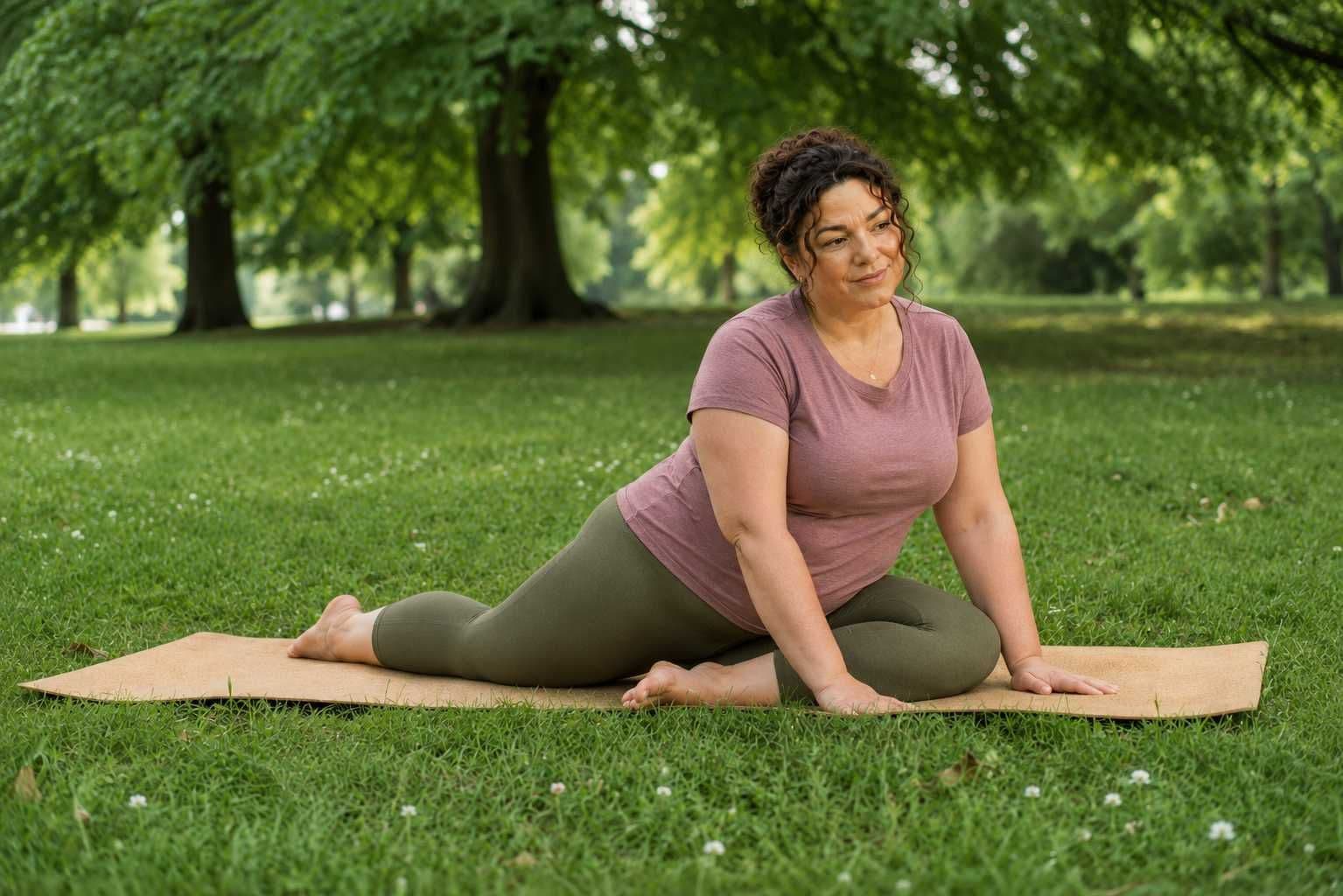
Pilates deserves a specific mention. It builds core strength, improves balance, and supports joint stability in a controlled and low-impact way. Many women with lipedema also have hypermobility, a tendency toward joints that move beyond their normal range, and Pilates is particularly well-suited to that combination because the controlled movements help build the muscular support that hypermobile joints need.
Gentle strength training, yoga, or sport isn't off the table either. The key is starting with light resistance and paying close attention to how your body responds in the 24 to 48 hours afterward. If you notice increased swelling, tenderness, or pain following a session, that's your body telling you to reduce the load and try something else.
A Note on Hypermobility
Hypermobility and lipedema co-occur frequently enough that it's worth raising directly. If you're unusually flexible, or if you've been told you have hypermobile joints, some forms of exercise carry a higher injury risk for you specifically. High-impact activities, overextension in the pool, and unsupported movements can all create joint injuries that then become their own source of inflammation.
If hypermobility is part of your picture, working with a physical therapist who understands it, or following a guided program specifically designed for hypermobile bodies is a sensible precaution. We've covered the connection between hypermobility and lipedema in a dedicated post on the site and if you'd like to understand more about how these two conditions interact give it a read. (link here)
The One Rule That Overrides Everything
Across every type of movement, every approach, every recommendation in this post, one principle applies universally: if it hurts, stop.
Not the mild discomfort of muscles working gently. Not the pleasant fatigue of having moved your body. The kind of pain, swelling, and tenderness that lingers for days and makes your lipedema worse. If a specific activity consistently produces that response, it's not the right activity for you right now, regardless of what worked for someone else in an online group.
You know your body better than anyone else does. Movement is a tool in your treatment, and like any tool, it works best when it fits the job. Pay attention, adjust accordingly, and give yourself credit for doing that rather than pushing through something that isn't serving you.