
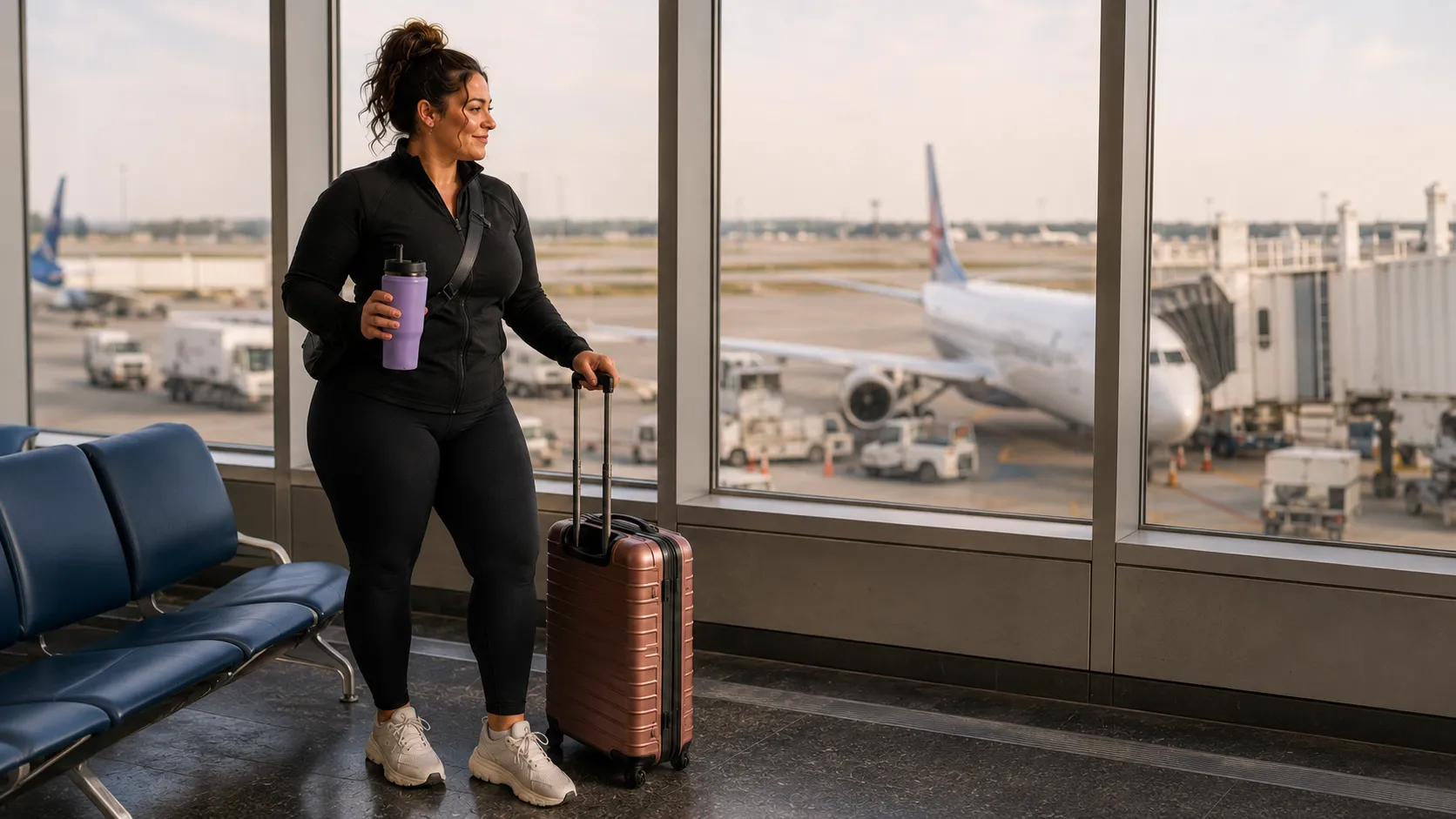
Pilots Don’t Hope, They Plan
No pilot takes off hoping the weather cooperates. Before the wheels ever leave the ground there is a flight plan: the route, the fuel, the forecast, the backup airport. Nothing about a good flight is left to luck.
Traveling with lipedema requires exactly that mindset. The women who step off a six-hour flight feeling reasonably comfortable are almost never the lucky ones. They are the ones who planned the day the way a pilot plans a flight, because a travel day quietly gathers almost everything lipedema tissue dislikes into a single stretch of hours: prolonged sitting, pressure changes, salty food, dry air, heavy bags, and a scrambled routine.
None of this is a reason to stay home. Travel is worth it: the wedding, the grandchildren, the relaxation you have been promising yourself. The point of a flight plan is not to shrink your life to fit your condition, it is to let you go farther with fewer consequences.
So let’s build a plan.
Why Travel Days Swell
Understanding the mechanics makes every strategy that follows feel less like a list of rules and more like common sense.
Your lymphatic system has no central pump. It relies heavily on movement, especially the contraction of your calf and thigh muscles, to push fluid up and out of your legs. Sit still for four hours and that pump is essentially switched off, while gravity keeps delivering fluid downhill. Research suggests that even people without lipedema experience measurable ankle swelling on long flights. In legs where the lymphatic system already runs near capacity, the effect is amplified.
Airplanes add their own pressures. Cabin air is pressurized to roughly the equivalent of a mountain peak at 6,000+ feet. This is notably less atmospheric pressure than one feels at sea level and encourages fluid to shift into the tissues. The cabin climate is remarkably dry, which nudges the body toward holding water and sluggish lymphatic flow. Add a salty airport meal and perhaps a glass of wine, and you have assembled the full recipe for arriving with tight shoes and aching legs.
Road trips run on the same physics minus the cabin pressure: long immobility, convenient salty snacks, and few natural reasons to move. The vehicle changes, the plan barely does.
The Pre-Flight Checklist
Most of what decides how your legs feel on arrival happens before you leave the house.
- Compression comes with you, worn, not packed. Travel is the single most valuable day of the year for your garments. Research suggests that wearing compression on flights of four hours or more reduces leg swelling and lowers the risk of blood clots, a benefit that matters even more when the lymphatic system is already burdened. If your current garments are uncomfortable enough that you are tempted to skip them, that is a fitting problem worth solving before the trip, not on it.
- Choose the aisle seat. It removes the social cost of getting up, and you will get up more because of it. On trains and buses, same logic. In the car, plan a stop every couple of hours and treat it as non-negotiable maintenance rather than lost time.
- Pack for your legs, not just your outfits. A refillable water bottle, an extra set of compression, supportive shoes you can loosen, and whatever your home routine uses: a dry brush, a tennis ball for foot rolling, your supplements. A small pillow or folded blanket can raise your feet a few inches in flight, and a rolling bag beats a shoulder bag that digs a strap into lymphatic pathways for hours.
- Guard the day before. Arriving at the airport already flared makes everything harder. Keep the day before departure lighter on salt and alcohol, heavier on water and sleep, and get a normal session of movement in. You are topping up the fuel before the flight.
If you have a history of blood clots, recent surgery, or a flight longer than a few hours ahead of you, it is worth talking with your doctor before you travel. A brief conversation can tailor this checklist to your particular situation, and it puts the trip on your care team’s radar.
In the Air and On the Road
Once you are moving, the job simplifies to two words: pump and pour.
Pump means motion. Every thirty minutes or so, work your ankles: point and flex, circle each foot, press your heels down and lift your toes. These small contractions squeeze the calf muscles and keep fluid moving even while you sit. Once an hour or so, when the aisle is free, stand and walk it, or at highway rest stops do two minutes of walking and a few gentle calf raises. It looks like fidgeting. It is actually therapy.
Pour means water, steadily, and more than feels natural in dry cabin air. It seems backwards to drink more when you are worried about swelling, but a dehydrated body holds stubbornly onto fluid, and lymph flows better when you are well hydrated. Skip or strictly limit alcohol when flying: it dehydrates and promotes fluid retention in one gesture, at exactly the wrong moment. Go easy on the salty snacks for the same reason. Bringing your own food is often the simplest fix.
One more in-transit kindness: loosen anything that digs. Waistbands, sock cuffs, and crossed legs all create little dams across the very channels you are trying to keep open. Comfortable, loose clothing over your compression is the travel uniform for a reason.
Once You Land
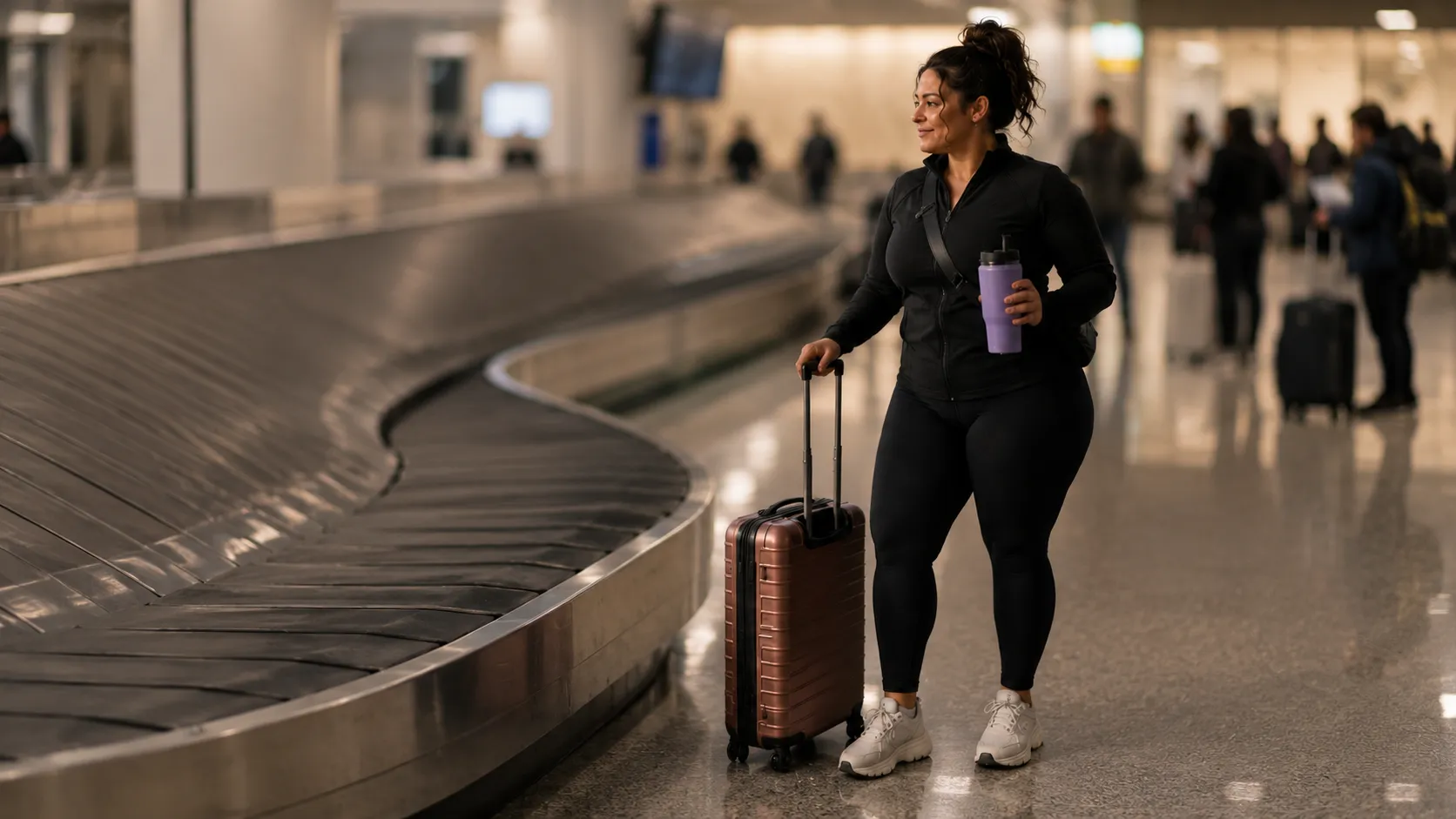
The first hour at your destination sets the tone. Before dinner, before unpacking perfectly, give your legs twenty minutes of elevation, ideally with your feet above heart level. If you practice self lymphatic drainage at home, this is the moment for an abbreviated version. A cool shower on the legs helps too, especially after a summer flight.
Then, for the rest of the trip, keep the skeleton of your routine and let the details flex. Compression on for sightseeing days, especially the ones with lots of standing. A pool, if your accommodation has one, is a gift: water pressure acts like gentle full-body compression while swimming pumps lymph, so the vacation swim is legitimately part of your management. Elevation in the evenings while you read or scroll costs nothing.
And release the guilt about imperfection. Vacation eating will be saltier, sleep will be different, and one flared evening does not undo your trip or your progress. The goal is a manageable trend across the week, not a flawless record. Your condition is coming on vacation with you, but it does not get to run the itinerary.
The Return Leg
Home again, expect your legs to need a day or two to settle. Extra rest, elevation, consistent compression, and plenty of water usually bring things back to baseline. Some women schedule a manual lymphatic drainage session for the week after a big trip, which is a lovely piece of planning if it is available to you.
Know the difference between routine travel swelling and something that needs attention. Swelling in both legs that eases with elevation and improves over a couple of days is the expected physics of travel. What deserves prompt medical attention is different: swelling or pain that is clearly worse in one leg, an area that is hot, red, or tender in a new way, or any shortness of breath or chest discomfort after a long journey. These can signal a blood clot, and travel is a known risk window for everyone, not only women with lipedema. Quick action matters far more than politeness about making a fuss.
Then, while the trip is fresh, spend five minutes on the debrief every pilot does after landing. What worked? What would you pack, book, or schedule differently? Each trip teaches the next one, and most women find that by the third or fourth journey with a real flight plan, travel stops being something their legs dread and returns to being what it was always supposed to be: the good part.